Author: mgroesch2014

Elton John – Friends (1971)

FriendsalbumElton John fans rejoice! Friends is coming to Netflix! Netflix just announced that…oh wait, nevermind…it’s not the long forgotten 70’s movie.

A movie that is so critically reviled that reading the skewering reviews virtually tempts one to hunt down a viewing copy and subject yourself to it. 

A vehicle that we are forced to reckon with because it meets the criteria of virtually everything that piques our interest.
 
Out Of Print Soundtrack: Check
Out Of Print Movie: Check
Awesome Cover Art: Check
Taboo Subject Matter: Check

And while Friends passes the smell test, it is a really tough one to endorse. Let’s turn it over to Roger Ebert for a more blunt take on the film:

“Friends” is the most sickening piece of corrupt slop I’ve seen in a long time. It’s so cynical in its manipulation of youth, innocence, sunsets and all the rest that you squirm with embarrassment. And the movie is all the more horrible because you realize that its maker, Lewis Gilbert, no doubt intended this to be a “sincere personal statement” (as they say in the movies) after his “commercial” projects like “The Adventurers” and “You Only Live Twice.”

Yet, “Friends,” in its way, is more cynically commercial than “The Adventurers,” which was at least an honest piece of crap. “Friends” drips with simpering close-ups of wide-eyed young faces. It has a sound track of slightly rotten syrup, interrupted occasionally by banal songs by Elton John. It has so many idyllic romps through the fields, so many sunsets, so many phony emotional peaks and so much pandering to the youth audience in it that, finally, it becomes a grotesque parody of itself.

Oh and he’s just getting warmed up.  Roger goes for the kill in his closing paragraph.

There are probably no 14- or 15-year-olds in the entire world like these two; they seem to have been created specifically for the entertainment of subscribers to Teenage Nudist. The archness of their “innocence” toward sex is, finally, just plain dirty. And the worst thing is that the movie seems to like it that way.

Damn, Ebert is missed. Read his full review here.

Critic vitriol aside, this movie was a worldwide hit (not so much in the US), and went on to garner a Golden Globe Nomination, and Lewis Gilbert soldiered on to make an even less welcome sequel called Paul and Michelle.

The Grammy nominated soundtrack isn’t a total loss. It’s Elton John and Bernie Taupin’s fourth full length collaboration, and you can tell they were locked-in, confident, and finishing each other’s sentences at this point.  Not a huge surprise that this album precedes Madman on the Water and what went on to become their golden era.

Friends is the maudlin, yet worthy, distant cousin of Candle in the Wind, and Honey Roll showcases the New Orleans vibes that would later show up on 1972’s Honky Cat. Elton John fans rejoice!

Friends – Elton John
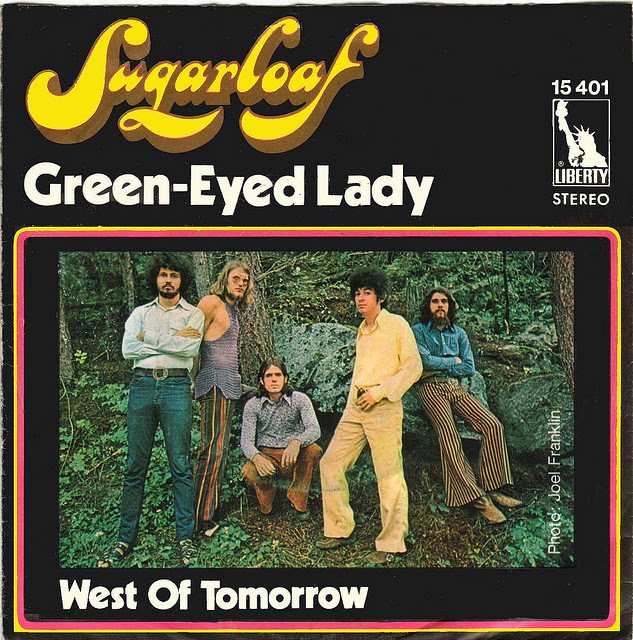
 

Sugarloaf – Green-Eyed Lady (1970)

Sugarloaf+-+Green-Eyed+LadyColorado, 1970. Jerry Corbetta and Sugarloaf are one with their high altitude.

Green-Eyed Lady takes some musical cues of the late 60s, channeling the jazz rock interplay of The Doors, yet incorporating a leisure suit nightclub bravado of the Swingin’ 70s.

West Of Tomorrow is the jam you want on the car radio while driving home from an inspired all-nighter with your best buds. The wah drenched arpeggios and assured tone of the overlapping vocals that invoke imagery of timelapse skylines and universal truths.  What more can you ask for?

 Green Eyed Lady – Sugarloaf

West of Tomorrow – Sugarloaf

Chad & Jeremy – Smoke (Paxton’s Song)

Chad+&+Jeremy+-+Three+In+The+Attic+-+LP+RECORD-422264Sticking with American International Pictures, purveyors of low budget drive-in faire, and turning my attention to their 1968 release Three In The Attic, which seems like their bizarro answer to The Graduate.

Wild In The Street star Christopher Jones plays Paxton Quigley in this story about an undergrad lothario at a small liberal arts college that simultaneously holds affairs with three co-eds. The females ultimately catch on, and in an effort to teach him a lesson, collude in holding him captive in the attic of a sorority house for days on end without food or water,  just rotating shifts of punishing intercourse.

Enter Chad & Jeremy. The folk-pop duo were most likely AIP’s low budget answer to Simon & Garfunkel, but ultimately a silver lining to this entire production.

Though credited to both Chad and Jeremy, most likely for marketing purposes, Three In The Attic is primarily a Chad Stuart affair. Reeling from two consecutive flops, Of Cabbages and Kings (1967) and The Ark (1968), in which the duo had eschewed it’s single oriented folk numbers for the more en vogue psychedelic full lengths, Chad & Jeremy had all but disintegrated. Stuart, an arranger by trade, was so anxious to score a film that he started this project sans Jeremy. The score is so chock full of timpanis, flute suites, string arrangements, horn sections and sitar solos, that it’s clear that Stuart wanted to flex his composition muscle to the fullest.  He even brought Jeremy around for Paxton Quigley Had the Course, a track that would end up being be the final Chad & Jeremy collaboration of their heyday.

The real treat here comes in the form of “Paxton’s Song (Smoke)”.  A psych-folk ode to young love that layers a really strong arrangement to a wistful melody. You’ve got to hand it to Stuart for making an earnest go at scoring an overtly gratuitous b-movie and actually trying to penetrate the psyche of it’s vapid protagonist. Bonus awkwardness comes mid-film, in the form of Christopher Jones actually singing the refrain to one of his conquests.

Paxton’s Song (Smoke)


The Cichlids -14 or Fight! (1980)

cichlids_coverLong before I heard the original “Fourteen or Fight” from Wild In The Streets, I somehow first heard the cover version by the relatively unknown Florida pop-punk outfit The Cichlids.

When I first laid eyes on the cover of the Cichlids album cover, I for some reason built up a whole backstory that they were like a brother/sister outfit. A power-pop version of the Osmonds or The Jets. The faux family bond, however, was my narrative and mine alone.

Formed in 1979, this band and their high-energy tunes burned brightly throughout the pan handle, even getting airplay on major Florida radio stations, but they broke up shortly after their sole eponymous full length.

Their take on the track is a very upbeat affair, channeling appropriate protest ethos of the Runaways by way of the Fabulous Stains, and frankly it makes the movie version sound like a tepid track from Bye Bye Birdie. Upgrade!

14 or Fight – The Cichlids

 Fourteen or Fight – The 13th Power


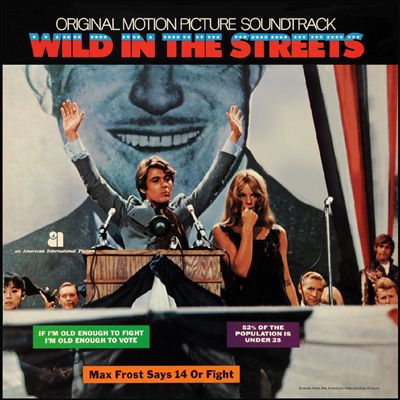
Wild In The Streets – OST (1968)

WildStreetsAmerican International Pictures was on point when they churned out Wild In The Streets in 1968.  Shot in just 15 days, the movie tapped into just about every aspect of the counterculture climate, and produced a decent soundtrack to boot.

The exploitation flick features Christopher Jones as Max Frost, a rock star who becomes President.  Max runs on the platform of lowering the voting age to 14 and forcing anyone over the age of 35 into internment camps, where they are fed a steady diet of LSD. It’s also worth noting that a young Richard Pryor plays the drummer Max Frost’s band.

While the movie is obviously a farce, the soundtrack is a somewhat relevant look at the homogenized sitar laden psych-pop faire that was popular at the time. Tune in Troops!

The Shape of Things to Come – The 13th Power

Wild In The Streets – Jerry Howard

Al Kooper & Shuggie Otis – One Room Country Shack (1969)

KooperSessionI never thought I would be writing these words, but I’m dangerously close to falling down an Al Kooper rabbit hole.

Prior to The Landlord OST, my only knowledge of Kooper was of his infamous involvement in the Highway 61 and Blonde On Blonde recording sessions, the copious amounts of soundbytes he has given about his time with Dylan, and his work with Stephen Stills and Mike Bloomfield on The Super Session.

As a teen who was just feeling his way around the indie rock scene, I have always distrusted The Super Session record from afar, mostly because it seemed to be the definition of the bloated establishment that I was running from. To this day I have never listened to it, but my days may be numbered.

A few months back, someone played me The Kooper Session (see what he did there?) that Kooper recorded with 15 year old guitar wunderkind Shuggie Otis. I really like it. The song below is in heavy rotation. Feel free to tell the dudes that run the Sub Pop Singles Club.

One Room Country Shack – Al Kooper & Shuggie Otis

Al Kooper – The Landlord (1970)

Landlord_movie_posterAfter years of hearing about this film, and years of owning to the soundtrack, I recently had the chance to watch The Landlord. 

Hal Ashby shines as a first time director, guiding a baby faced Beau Bridges as the aloof socialite manchild that is Elgar Enders in this 1970 black comedy. Elgar buys a tenement building in Brooklyn’s “ghetto” Park Slope (!!!) and plans to gut the place and evict his tenants. During the process Elgar gets to know the tenants, love affairs happen, empathy occurs, and his master plan quickly unravels.Using some of the cultural touchstones that he would later exploit in Harold And Maude, Ashby somehow transforms what starts out as a straight up satirical comedy about family, classism, racism, and colorism, into a touching drama about an extremely entitled young man finally taking responsibility for his actions. This film easily ranks up there with Ashby’s best.

I first heard about this movie about a decade ago, via the incredible Brooklyn Public Access show Rare Groove Revolution. A fantastic show in which two crate-diggers would sit in front of a black backdrop, and listen to and comment on obscure records. It was like Charlie Rose for beat-heads. They couldn’t say enough about the breakbeats on this Soundtrack.  Overall the record is a well balanced showing of rock, break beat funk, 70s party music, and even moments of theremin driven ambiance. It all makes sense within the context of the movie. Side A opens with the white bread ‘Elgar Version’ of “Brand New Day” as sung by Al Kooper, and the b-side opens with the same track sung by the Staple Singers, in a nod to the tenants.

“Love Theme” packs alot of ballad in it’s three minutes. It starts with Kooper singing about Elgar’s journey into manhood and ends with some pretty tasty guitar work. “The Landlord” is worthy to be part of Blue Note’s Rare Grove Series. It was sampled by DJ Shadow on his Preemptive Strike track “The Hindsight”.

The Landlord – The Landlords

Love Theme (From the Landlord) – Al Kooper

Kris Kristofferson – Casey’s Last Ride (1970)

spillway-interior-1_2Another great “Kris Kristofferson Moment in Music Supervision” comes to us by way of True Detective, Season One, Episode Five.

Matthew McConaughey’s Rust Kohle and biker bud Ginger are waiting at the bar for Rusty LeDoux, and in the background set to Kristofferson’s “Casey’s Last Ride” a song that foreshadows, love, death, adultery, lowlifes, and lament. In other words, it sums up True Detective in a nutshell.

There are many covers of this song out there, many variations by Kristofferson himself, but the original recording used here is by far the best.  It plays like a funkyMorricone Spaghetti Western track fully loaded with crispy guitars, tension drenched keyboards, choral arrangement, and a reserved refrain akin to Leonard Cohen’s hushed vocal work for the McCabe and Mrs. Miller soundtrack.

Casey’s Last Ride – Kris Kristofferson

Kris Kristofferson – Help Me Make It Through The Night (Fat City 1970)

FatCity_kris-kristofferson1The opening sequence of John Huston’s Fat City is a perfect storm of music supervision, cinematography, editing, and casting.We open on the desolate outskirts of Stockton, California in 1970. Famed cinematographer Conrad Hall weaves images of razed buildings, migrant workers, bums and drunks into a skid row tapestry as compelling as any Hopper or Rockwell around.  As the camera pushes into a seedy transient hotel, we find Stacy Keach’s Billy Tully laying in bed, staring listlessly at the ceiling, and reaching past the half empty bottle of whiskey on his nightstand for his first cigarette of the day.


The inclusion of Kris Kristofferson’s “Help Me Make It Through The Night” nails it here. The tune could not only be the mantra of Keach’s maudlin amateur boxer, as he stumbles through another week of sparring, drinking, and working as a day laborer picking fruit, but could also work for Susan Tyrell’s fantastic co-dependent wino, or fresh faced boxing newbie played by Jeff Bridges, or any of the sad sacks we see in the periphery of this film.This whiskey soaked and more down tempo version seems almost custom tailored to our protagonist, more fitting than any of the versions that seem to be included on Kristofferson’s studio albums and compilations.  I’m guessing this was recorded specifically for the movie, as it is also accompanied by a melancholic guitar and keyboard laden instrumental bed that precedes Kristofferson’s recording. Sunday Mornin’ Comin’ Down indeed.
Help Me Make It Through The Night – Kris Kristofferson

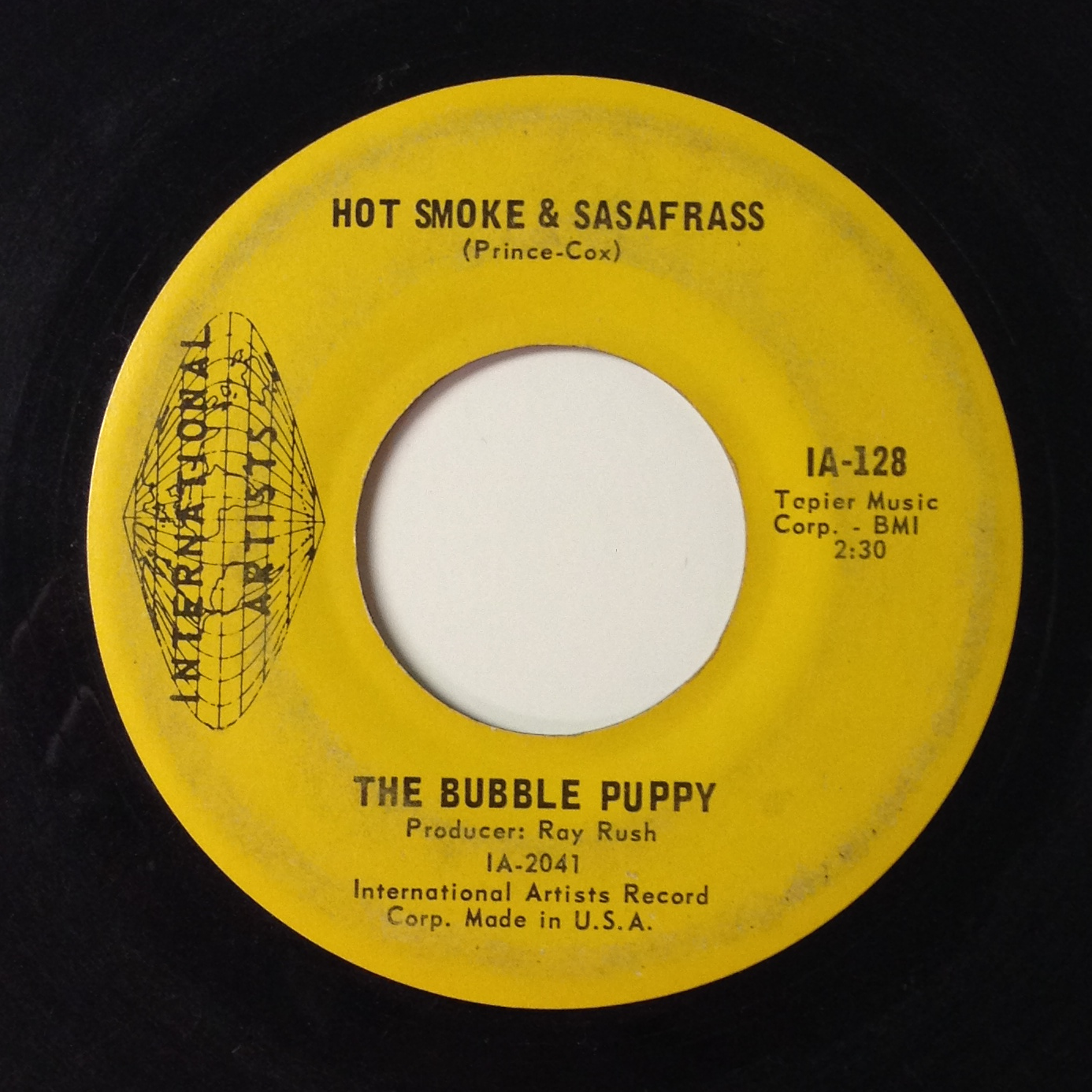
The Bubble Puppy – Hot Smoke & Sasafrass (1969)

BubblePuppy_CropI picked up this 7-inch at a Savers a few months ago, assuming it was some teeny bopper music from the Sixties.  I was thrilled to find some Southern fried psych jams instead.

This 45 is filled with meaty riffs and blistering licks that sees The Bubble Puppy organically segue from garage psych into Allman Bros territory by the way of a steady groove and harmonizing guitar leads. Turns out these dudes were from San Antonio, and “Hot Smoke & Sasafrass” was a Top 20 hit. Love it.

A: Hot Smoke & Sasafrass – The Bubble Puppy

B: Lonely – The Bubble Puppy